Download
Abstract
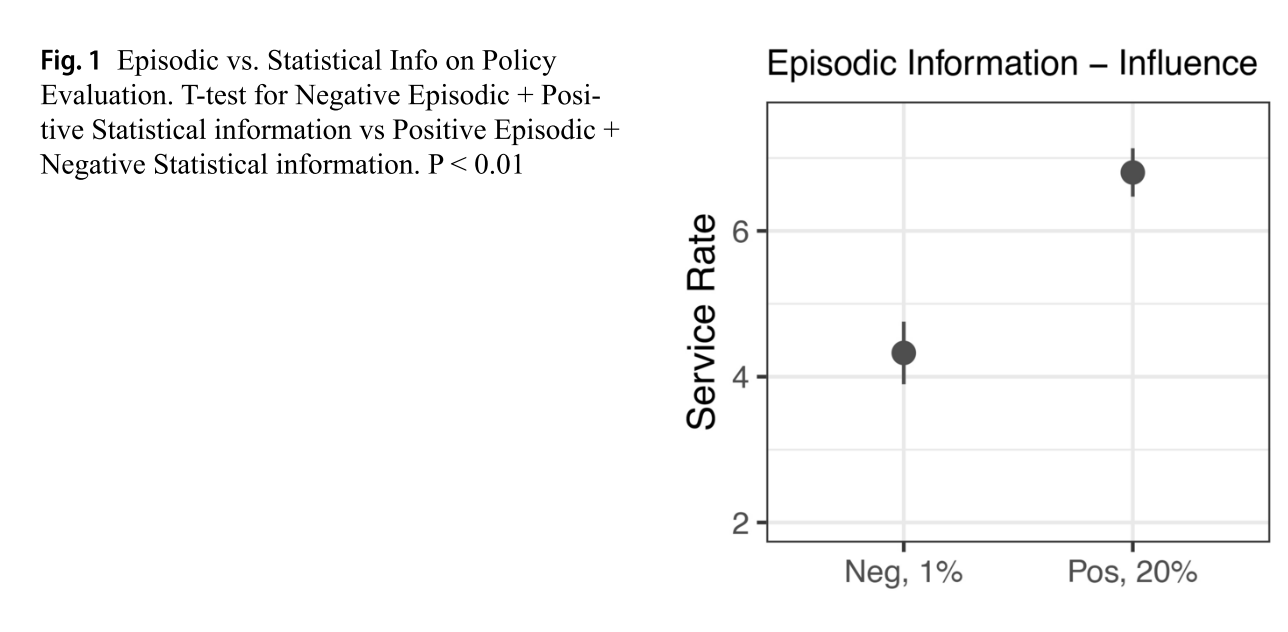
Are politicians more influenced by anecdotal evidence than statistical data? While extensive research has explored the implications of this question for the general public, studies examining the role of anecdotes or exemplars among politicians are lacking. If politicians are disproportionately influenced by information derived from personal experiences (episodic information), their agendas, priorities, and perceptions may become biased. Through a series of preregistered survey experiments conducted among elected officials in Chile, this study examines the extent to which politicians are more sensitive to episodic evidence over statistical information. The findings suggest that politicians consistently ignore statistical information while relying more on episodic information, measured as the effect of each type of information on both their assessment of policies and how much they remember about experiences in a public service. Furthermore, the study reveals that the effect size and magnitude are comparable to those observed among the general population. These findings shed light on politicians’ use of this cognitive shortcut, and raises the need for further research on this topic.
Figure 6: Effects of Episodic Information on Policy Evaluation
Citation
Cruz, D. The Influence of Episodic Information on Political Elites: Evidence from Chile. Polit Behav (2025). https://doi.org/10.1007/s11109-025-10034-6