Download
Abstract
The persuasion models of influence on the political decision-making process suggest that interest groups provide information to convince politicians to change or maintain their positions on a policy. In this paper, I argue that to correctly assess the models’ claim, we have to understand how politicians perceive interest groups as information sources and whether their perceived credibility affects how persuasive they are. Politicians, unlike average citizens, should hold high levels of awareness about groups seeking to influence the policy-making process and their intentions. By applying a preregistered survey experiment among Chilean politicians, I show that while they are more skeptical about interest groups as sources of information, this does not translate into a lower influence of the information provided by these groups. In line with previous research on citizens, advocacy groups appear to be a source like any other. These findings have implications for our understanding of the roles interest groups play in the decision-making process.
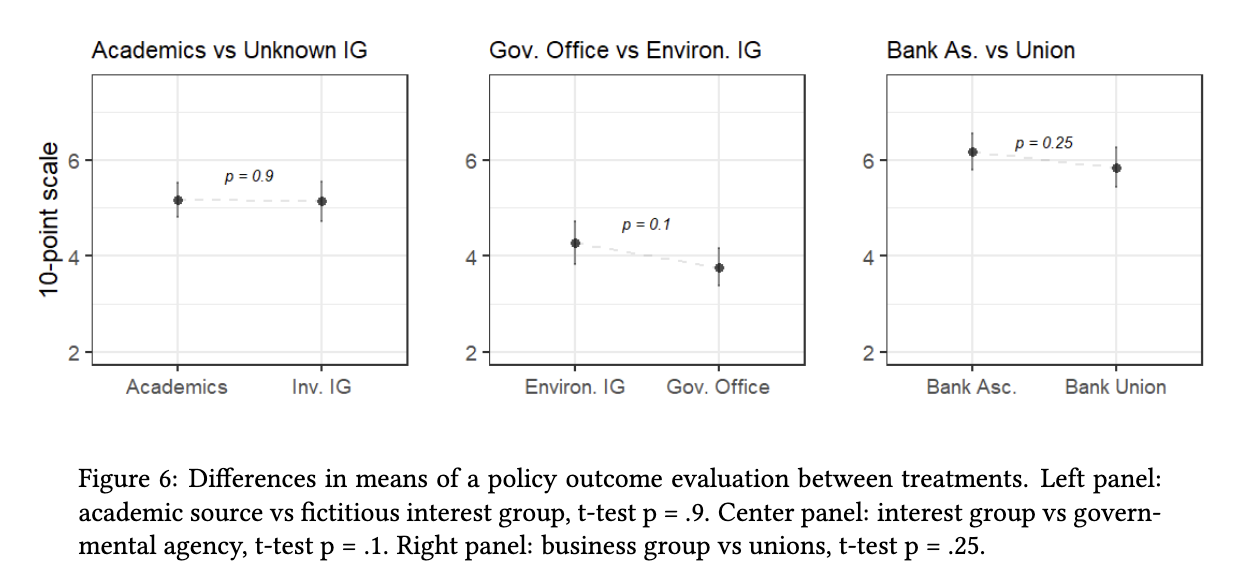
Figure 6: Differences in means of a policy outcome evaluation between sources with different perceived trustworthiness
Citation
Forthcoming